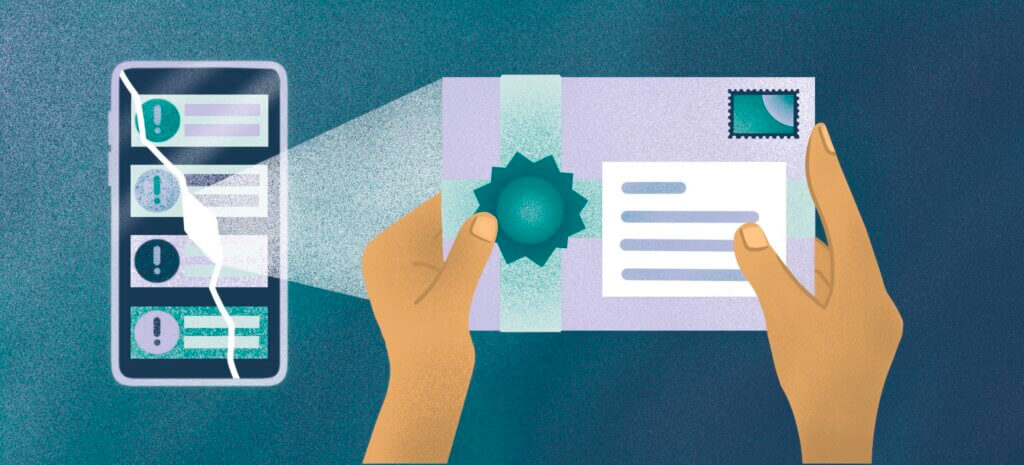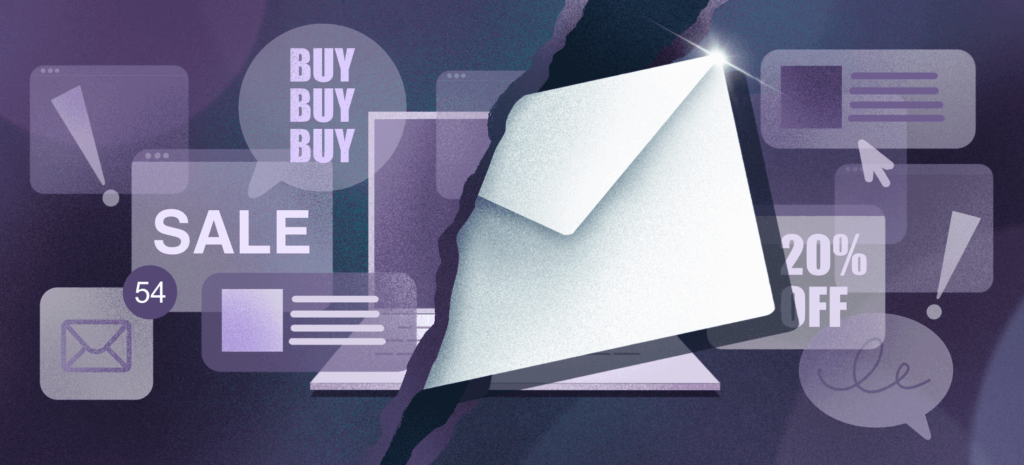
In today’s market, digital channels are facing what we call crippling digital fatigue. Your customers are bombarded with hundreds of emails and thousands of ads daily, causing them to feel overwhelmed. If you’re a forward-thinking marketer looking for a channel that genuinely cuts through the noise and delivers measurable results, you’ve likely realized that the mailbox is your next great frontier.
Direct mail (DM) is far from a relic; it’s a dynamic, high-performing channel that is seeing a resurgence, particularly among Millennials and Gen Z. It has an inherently tangible, physical connection that digital ads simply cannot match, leading to an open rate of up to 90%, compared to email’s 20–30%. Plus, nearly half of consumers (49%) view brands that send mail as more credible and authentic than those that rely solely on digital.
Ready to launch your first successful campaign? Good! You need to move beyond the old idea of “spray-and-pray” and adopt a strategy that is smart, efficient, and integrated.
Here is Snowball Print Marketing’s simple 5-step process for running your first high-impact direct mail campaign:
1. Define Your Goals & Target Smarter
Every successful campaign starts with a clear objective. Before spending a single dollar, determine if your primary goal is acquisition, retention, lead generation (the top purpose for DM campaigns), or driving traffic to your new website. Once the goal is set, identify your audience. Irrelevance is the number one reason mail fails. Start with clean data and segment your customers based on key behavioral or demographic traits to ensure your message lands with the right person. Advanced targeting helps marketers reduce waste and improve ROI.
To maximize your reach and reduce wasted spend, don’t limit yourself to your internal house lists. You should enlist the support of a strategic partner to enhance your existing data and/or find you new leads. We specialize in leveraging external physical address-based data and utilizing data licensing through key partners to find new customers. By using predictive modeling and look-alike modeling, we can build new audience lists that mirror your top-performing customers. This approach integrates first-party data with modeled third-party intelligence, focusing your spend on high-potential prospects with a statistically high likelihood to convert. DM campaigns sent to prospect lists deliver a high ROI, averaging 67%.
2. Craft a Personalized Message and Compelling Offer
Your mail piece must resonate deeply. Personalization goes far beyond printing a name; it’s about tailoring the content, messaging, and offers based on the recipient’s interests or past behavior. Studies show that personalized direct mail drives response rates up to 135% higher than generic mailers. Remember that providing a clear, valuable offer is one of the essential steps.
3. Choose the Right Format and Perfect Your Timing
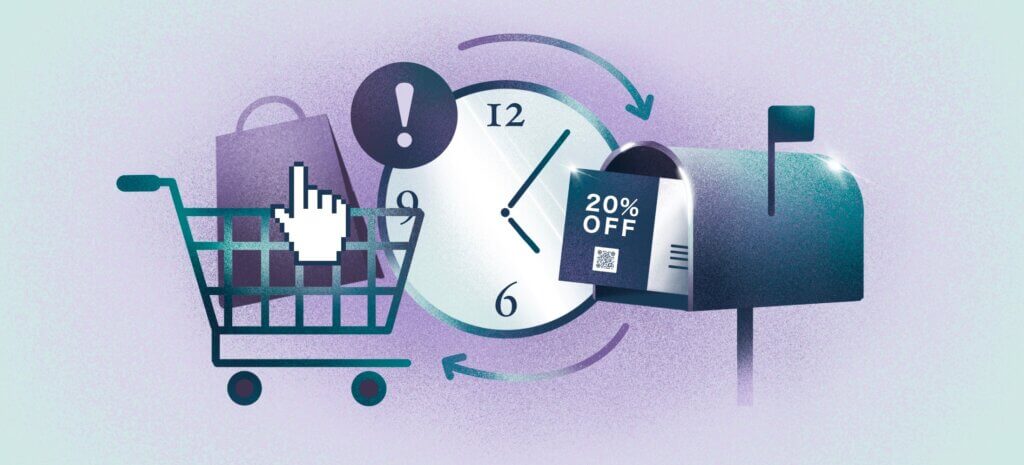
Select a mail format that matches the complexity of your message. If you need urgency, a postcard is efficient. If you need to tell a complete story, a personalized letter package works well. Consider Right Time Marketing, using digital intent data (like browsing histories or abandoned carts) to trigger mail pieces that arrive at the precise moment a customer is ready to make a purchase.
4. Integrate Digital Touchpoints
Direct mail is at its most powerful when it works in tandem with digital marketing. Creating a seamless customer experience requires linking the physical piece to the online world. Incorporate easily traceable elements like unique QR codes or Personalized URLs (PURLs). This synergistic strategy, which pairs physical mail with email or digital ads, can boost overall response rates by up to 35%. Tools like the USPS Informed Delivery feature can also reinforce messaging by giving customers a digital preview of their incoming mail.
5. Track, Measure, and Optimize
You must be able to prove your campaign’s worth. DM is as measurable as digital. Use unique tracking codes, PURLs, and QR codes (used by 60% of marketers who track DM response rates) to monitor online activity driven by the mail. Advanced measurement techniques like holdout groups (or control panels) and matchback analysis can quantify the incremental revenue lift over baseline sales. This data-driven approach allows you to optimize future campaigns immediately.